

Fix a Settlement (Void & Change)
Purpose: Void an settlement, correct or add missing details (such as a fuel surcharge or a rate fix), and create a new settlement to send to the customer or vendor. When to run: Any time line items on a settlement is found to be incorrect or incomplete. Approved settlements cannot be edited directly — they must be voided and recreated. Prerequisites: The settlement you need to fix has been created. You know what needs to change (an add-on for a single invoice, or an order-level change that should apply across all loads). Related: Create & Send Settlements — the happy-path settlement workflow this is the recovery flow for.Section 1: Void the existing settlement
Step 1 — Open the approved settlement
Go to the Settlements tab and locate the approved settlement you need to modify.Step 2 — Void it
Click Void on the settlement. This removes the settlement but preserves the underlying order, so you can create a new settlement with updated information.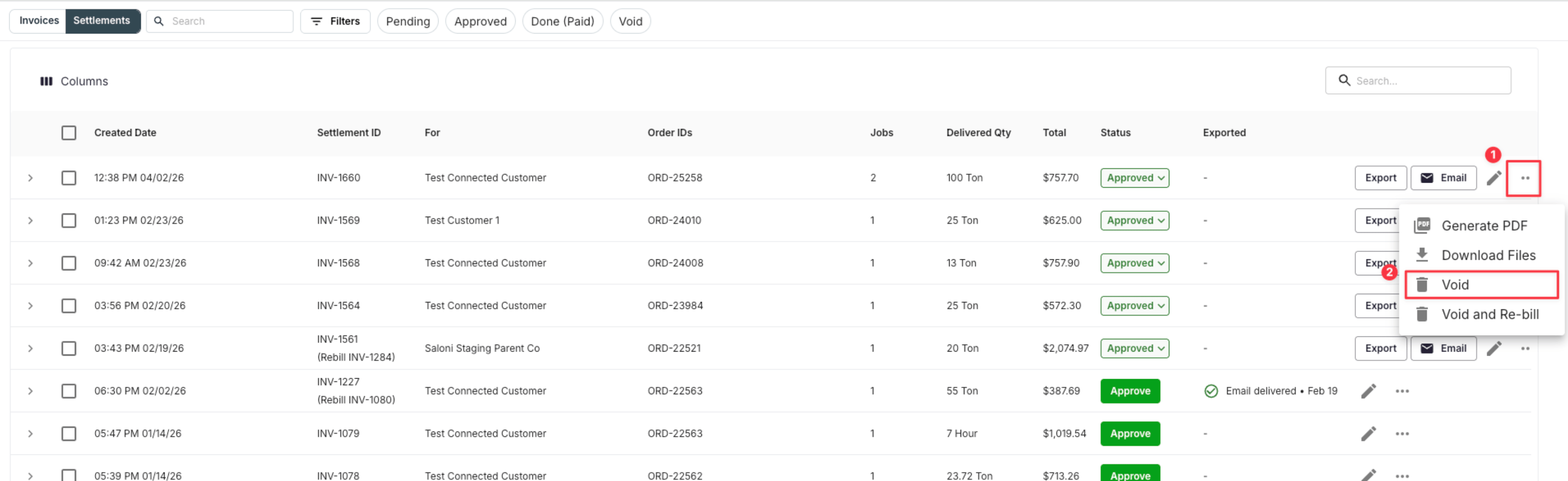
Section 2: Unapprove the receivables or payables
Step 3 — Navigate to Receivables (or Payables)
Navigate back to the Payables or Receivables tab that you would like to make changes to.Step 4 — Unapprove the invoice
Click Unapprove under the invoice. The line items have to be unapproved before you can edit them.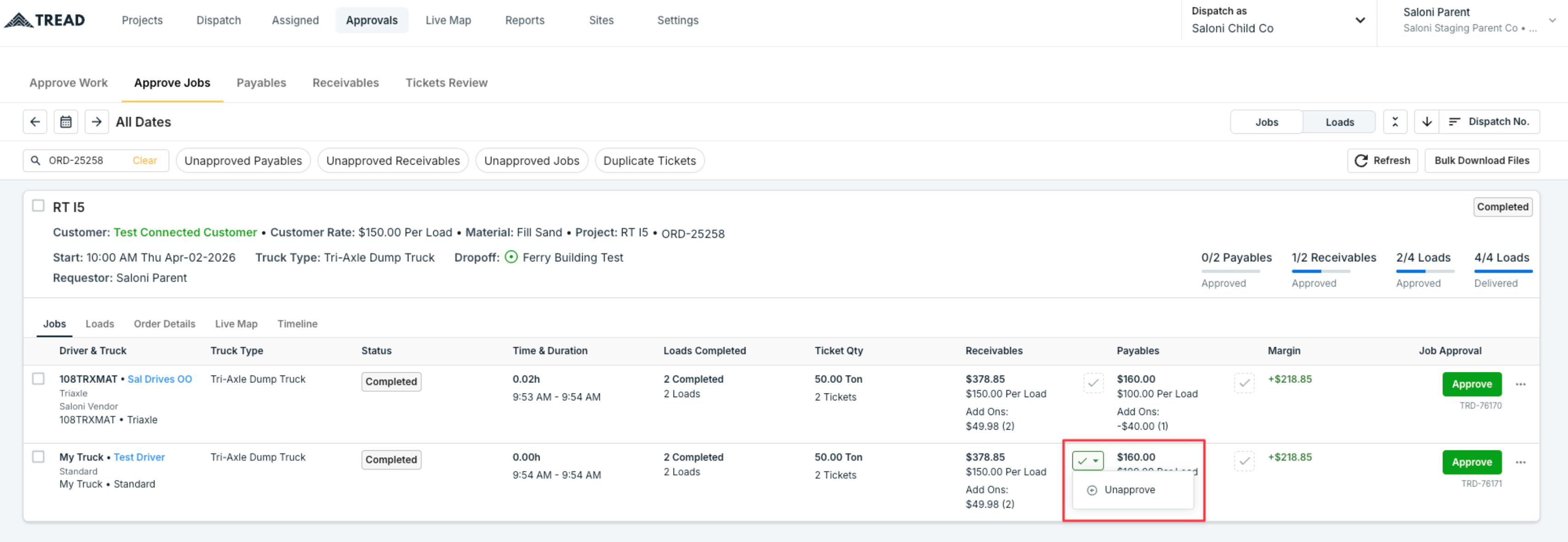
Section 3: Make your changes
Pick the option that matches the scope of the change:- One individual change on one job/dispatch? Use Option A.
- A charge or rate change that should apply across the whole order? Use Option B.
Option A — Edit at the individual job/dispatch level
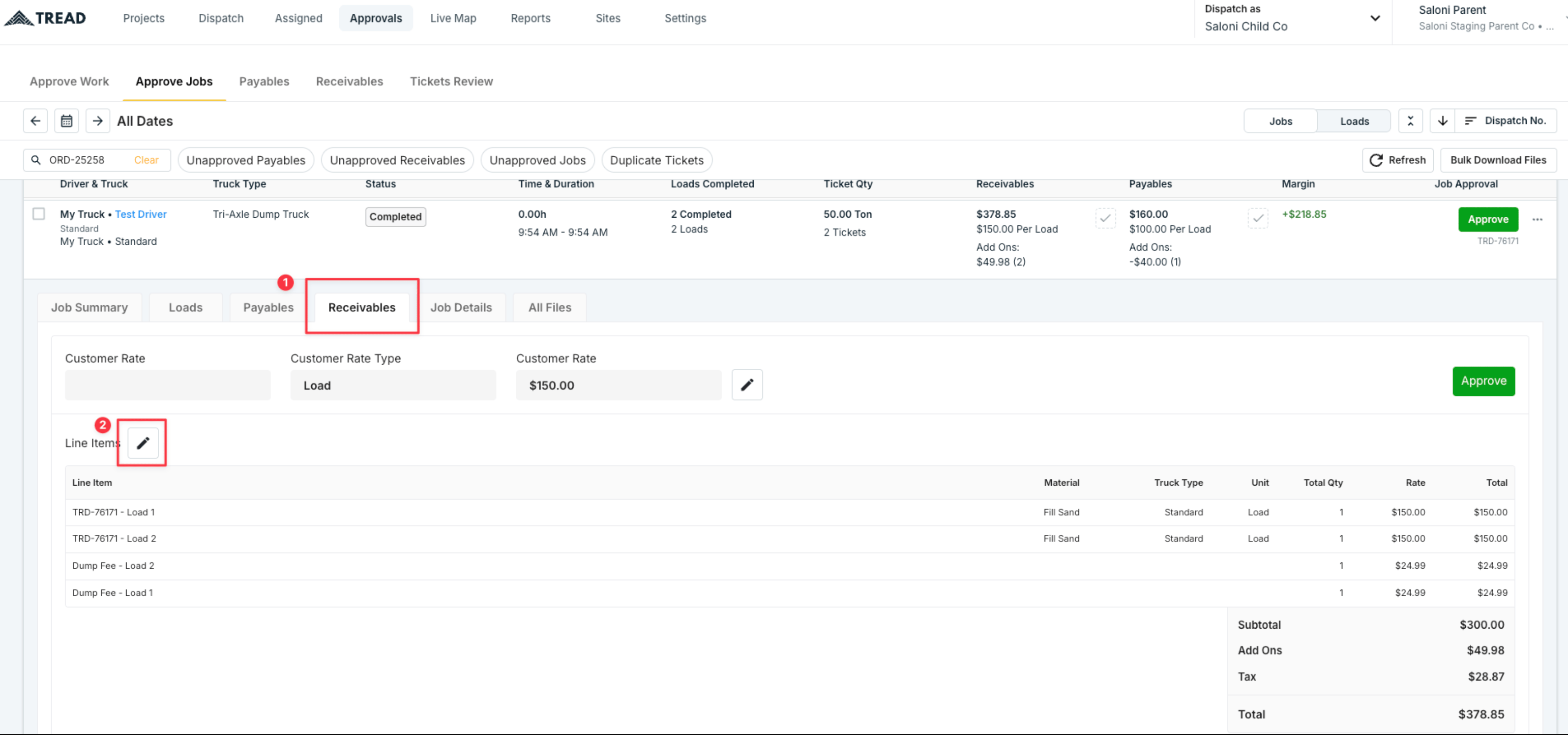
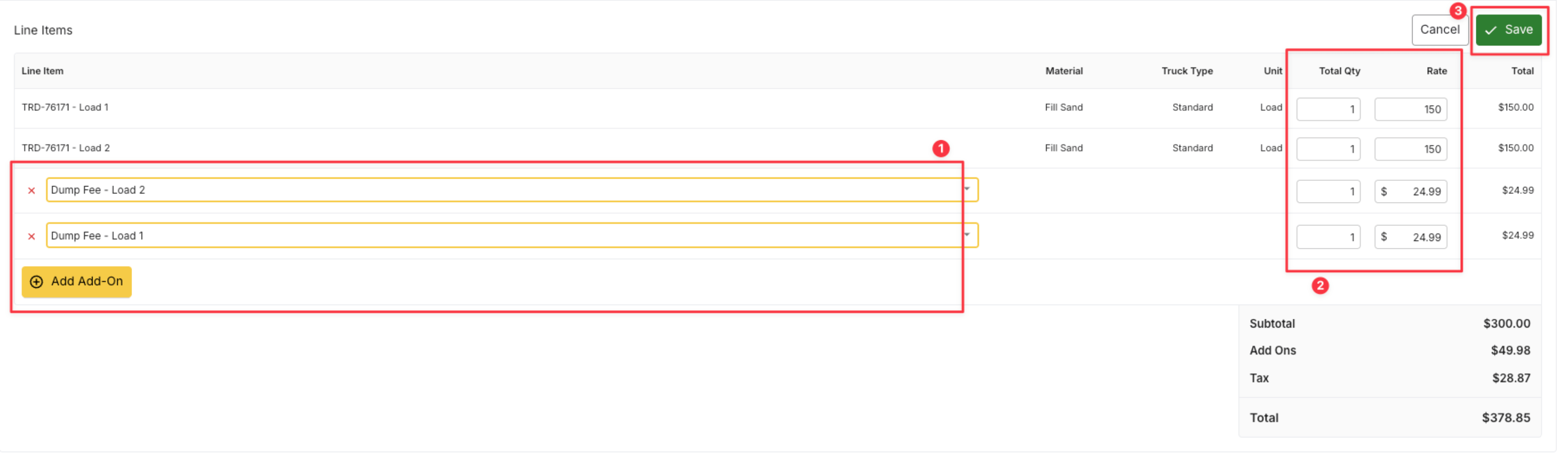
For a one-time change on a specific invoice (e.g., a single Job-level change), edit directly in the receivables/payables view without leaving the screen.- Locate the line item you want to modify.
- Click on the pencil icon to edit rates, quantities or add-ons.
- Save your changes.
Option B — Edit at the order level
For changes that apply to the entire order — such as a fuel surcharge, a rate correction, or any charge that should appear across all loads — make the change in Dispatch.- Copy the order number from the receivables/payables view.
- Navigate to the Dispatch tab.
- Locate and open the order.
- Add the missing item (e.g., fuel surcharge) in the appropriate field.
- Click Save, then Submit.
-
The change automatically applies to all invoices under that order.
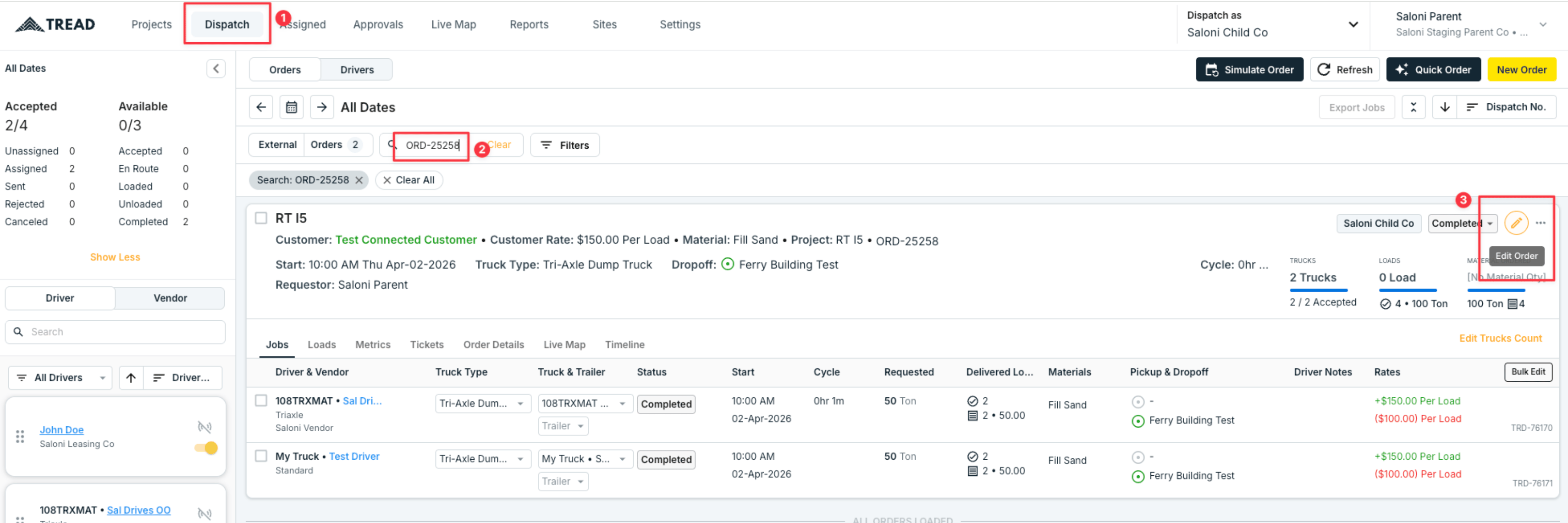
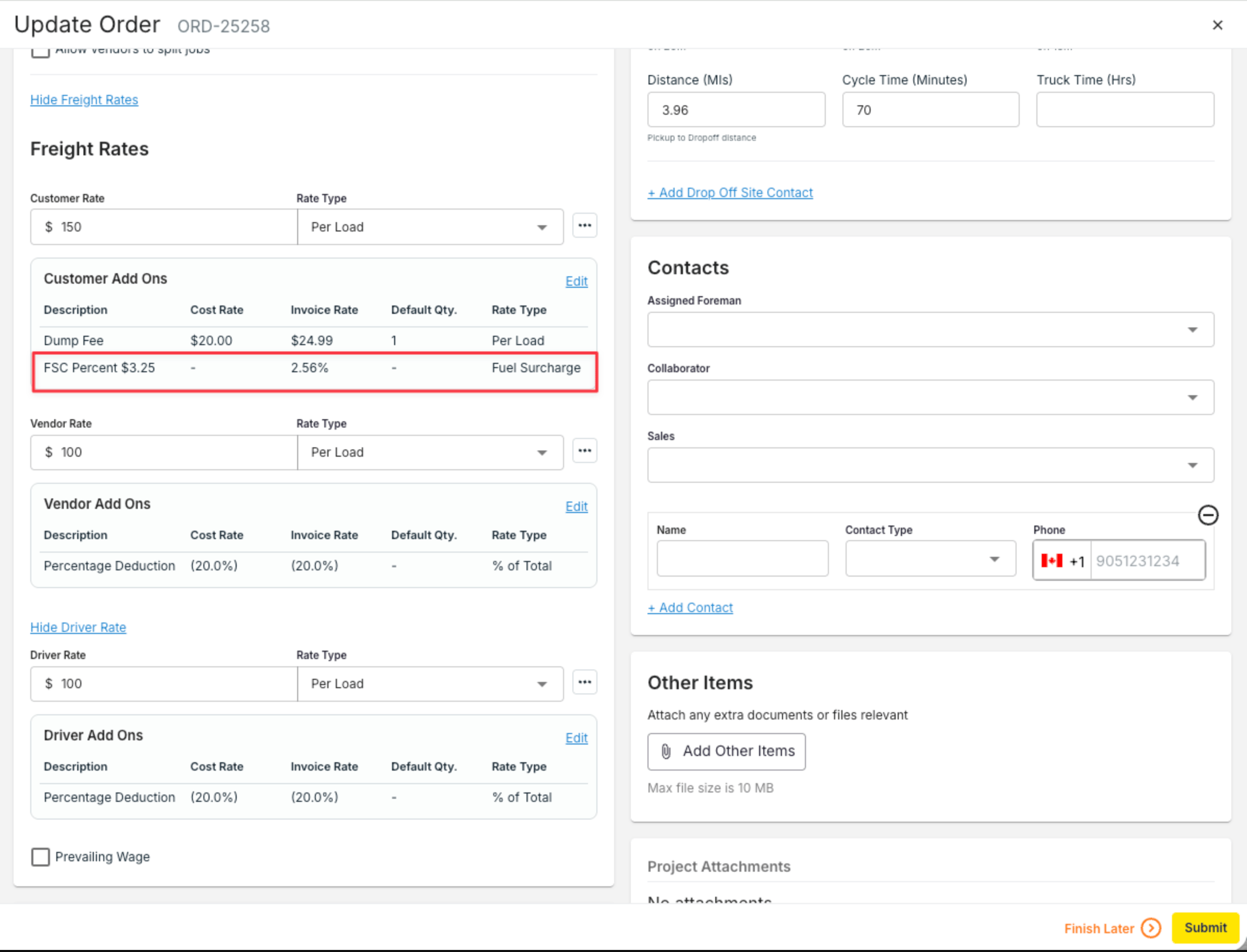
Step 5 — Verify changes applied
Return to the Receivables (or Payables) tab and confirm the changes are reflected. For example, if you added a fuel surcharge at the order level, you should now see it on all relevant loads/trucks under that order.Section 4: Re-approve and create a new settlement
Step 6 — Approve the updated receivables/payables
With your changes in place, re-approve each invoice. This is the same approval step from the original workflow. You can bulk approve directly in the Payables or Receivables tabs.Step 7 — Create the new settlement
Click Create Settlement on the order in the Receivables/Payables view. Manual selection (vs. bulk) is the right call here since you’re typically redoing one settlement, not processing many at once. The system generates a new settlement for that order, now including your changes.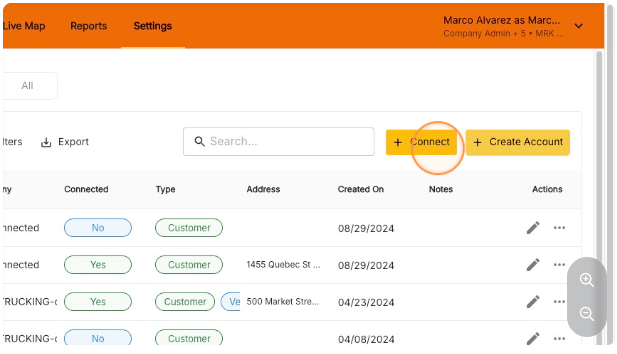
Step 8 — Review the new settlement
Open the Settlements tab and the newly created settlement. Scroll down to verify all changes are present — for example, confirm the fuel surcharge appears for every applicable truck.Section 5: Approve and email the new settlement
Step 9 — Approve
Click Approve on the new settlement.Step 10 — Email
Click Email to send the updated invoice to the customer or vendor, then click Send to confirm. Verify delivery in the status indicator.Tips
- Access voided settlements for reference. If you need to look up a previous voided settlement (for record-keeping or comparison), go to the Settlements tab and click the Void filter. This displays all previously voided settlements.
- Choose Option A vs Option B by blast radius. If only one invoice is affected, Option A (invoice-level add-on) is faster and lower-risk. If the change should apply to every load on the order, always use Option B (order/dispatch level) — applying it invoice-by-invoice is where mistakes happen.