

What this solves
When pricing varies by truck, material, or site, billers end up re-keying rates on every ticket. Project Rates ends that. You define the pricing rules once on the Project. Tread then applies the right customer, vendor, and driver rate to each order and job automatically. Each rate holds three values:How matching works
Conditions narrow when a rate applies. There are four, combinable in any mix: Pickup Site, Dropoff Site, Equipment Type, and Material. A rate with no conditions is the project-wide default. Matching runs per job, once equipment is assigned. Change the truck, pickup, dropoff, or material and the rate re-evaluates. The pick order:- Manual override — never replaced by automatic matching.
- Starred rate — forces one rate onto every job on the order.
- Most specific match — three conditions beat two, two beat one.
- Project default — the no-condition rate.
- Company rate cards — account-specific first, then defaults.
Walkthrough
1
Open the Freight Rates panel
Open a project. Rates appear as accordion rows — collapsed shows a summary with condition chips.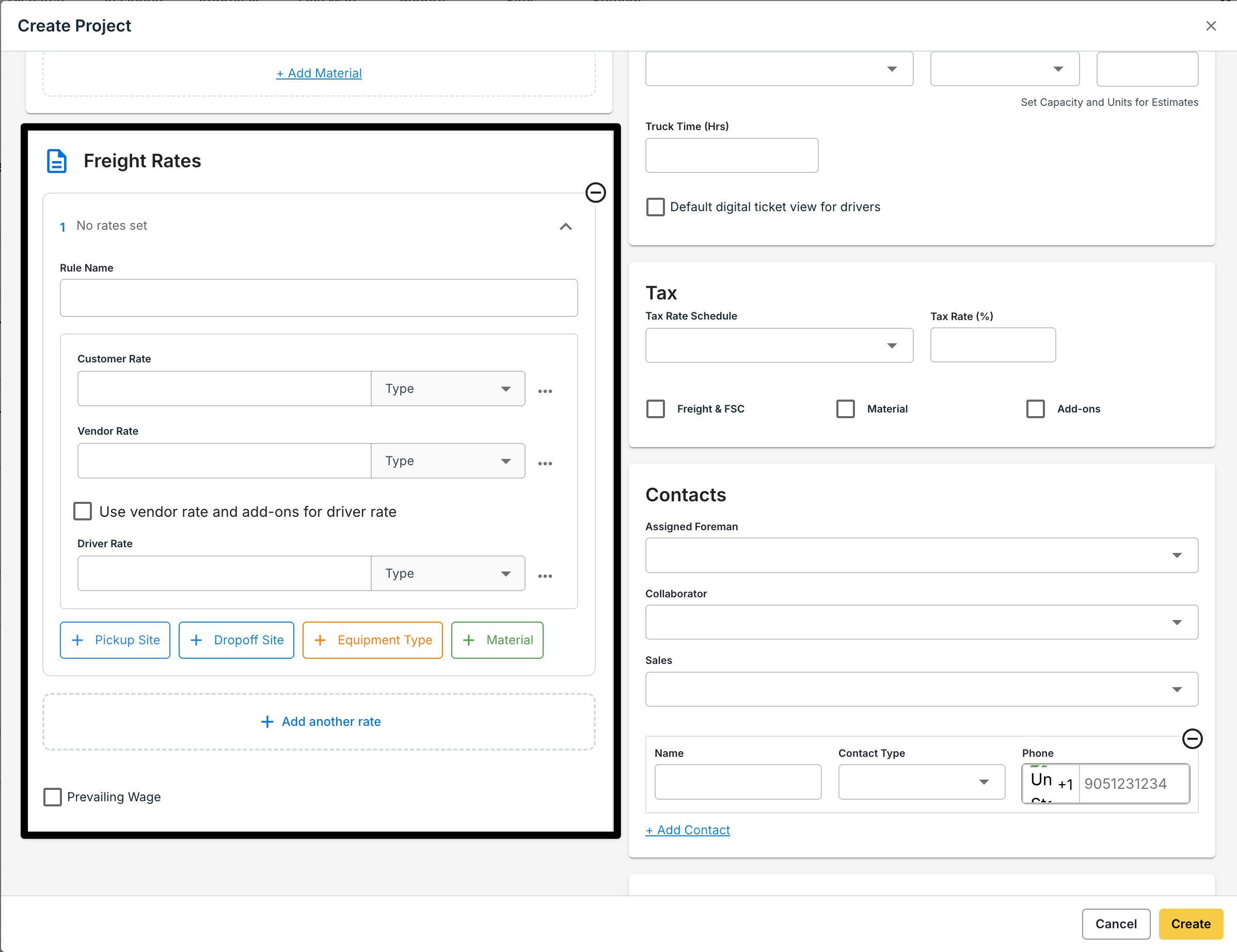
2
Add a rate
Click Add another rate. Name it clearly (e.g., Tri-Axle Gravel from Main Quarry). Enter the customer, vendor, and driver values, then add conditions. Duplicate a rate to clone and tweak. There is no limit on rate count.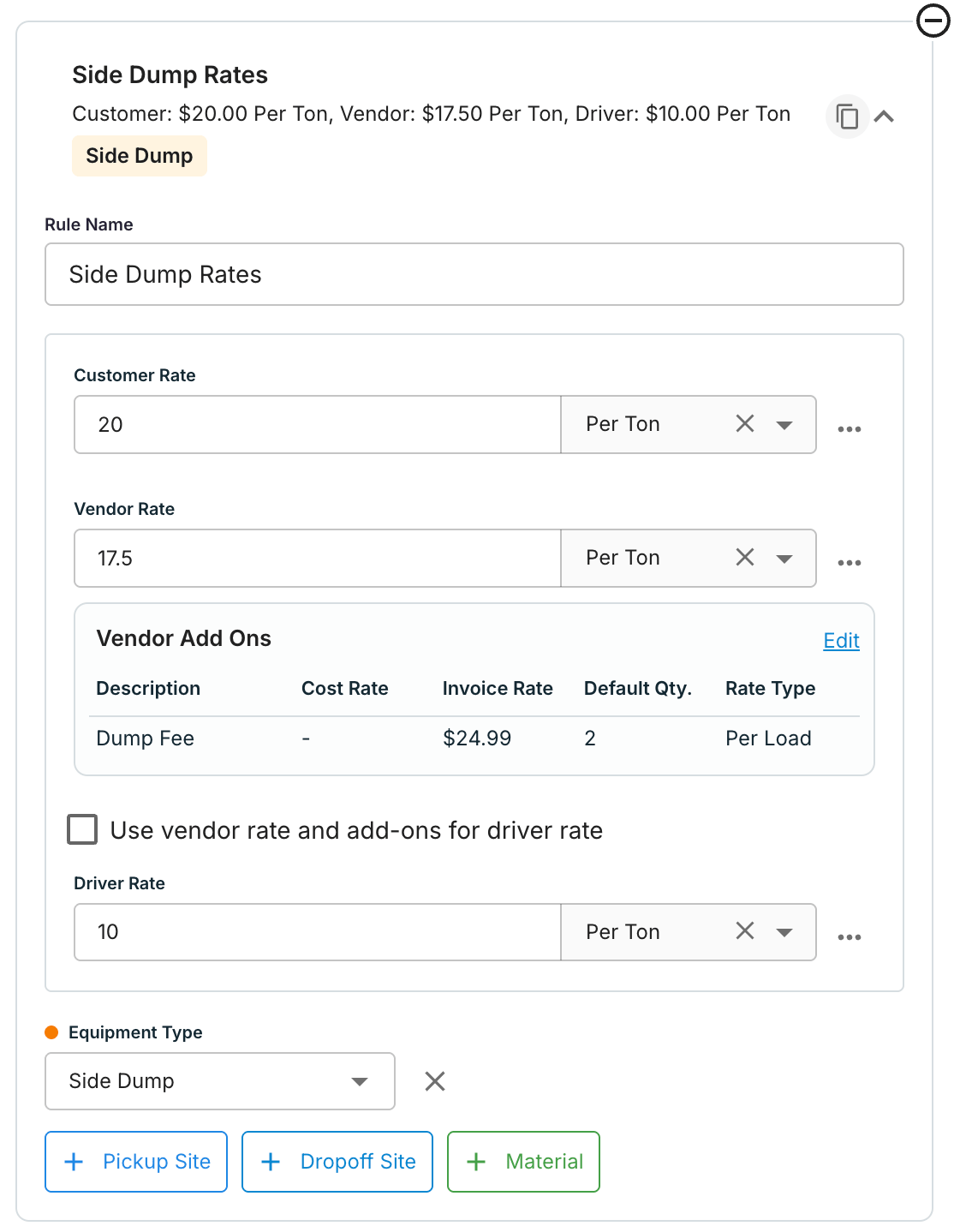
3
Attach add-ons or a rate card
Use the … menu on a rate row to attach add-ons (fuel surcharge, standby) or pull in an account rate card as a starting point. Update a rate card once and every project using it picks up the change.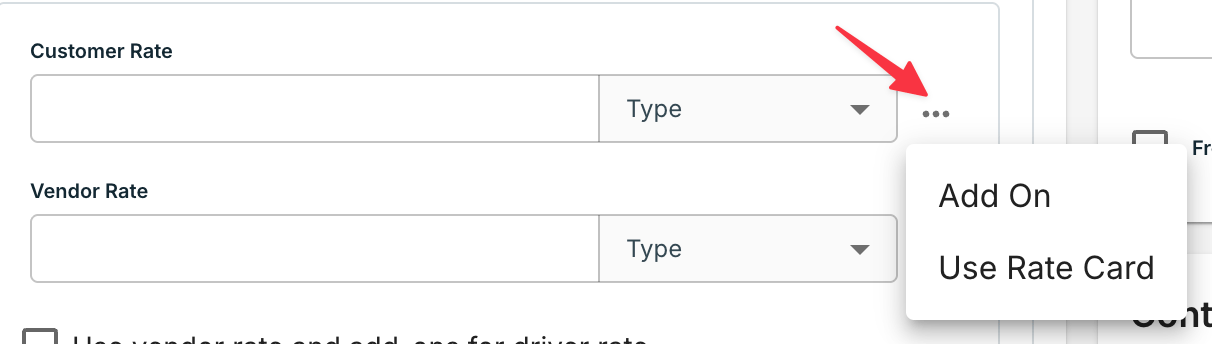
4
Check the order
Every order form shows the project’s rates. Star one rate to force it onto every job — useful for flat-rate hauls. Orders without a project can hold their own order-level rates.
5
Rate matching and assignment
Assign a vendor or driver, or set equipment — rates match automatically on each job row. To verify which rate card was applied, open the Edit Rates or Edit Job form.
6
Manually override a job when needed
Fix a single job from the Edit Job or Edit Rates form. You can change any value directly, or pick from a dropdown of the project’s rates — choosing a non-matching rate flags the job as manual. Editing any of the conditions reverts it back to the system match.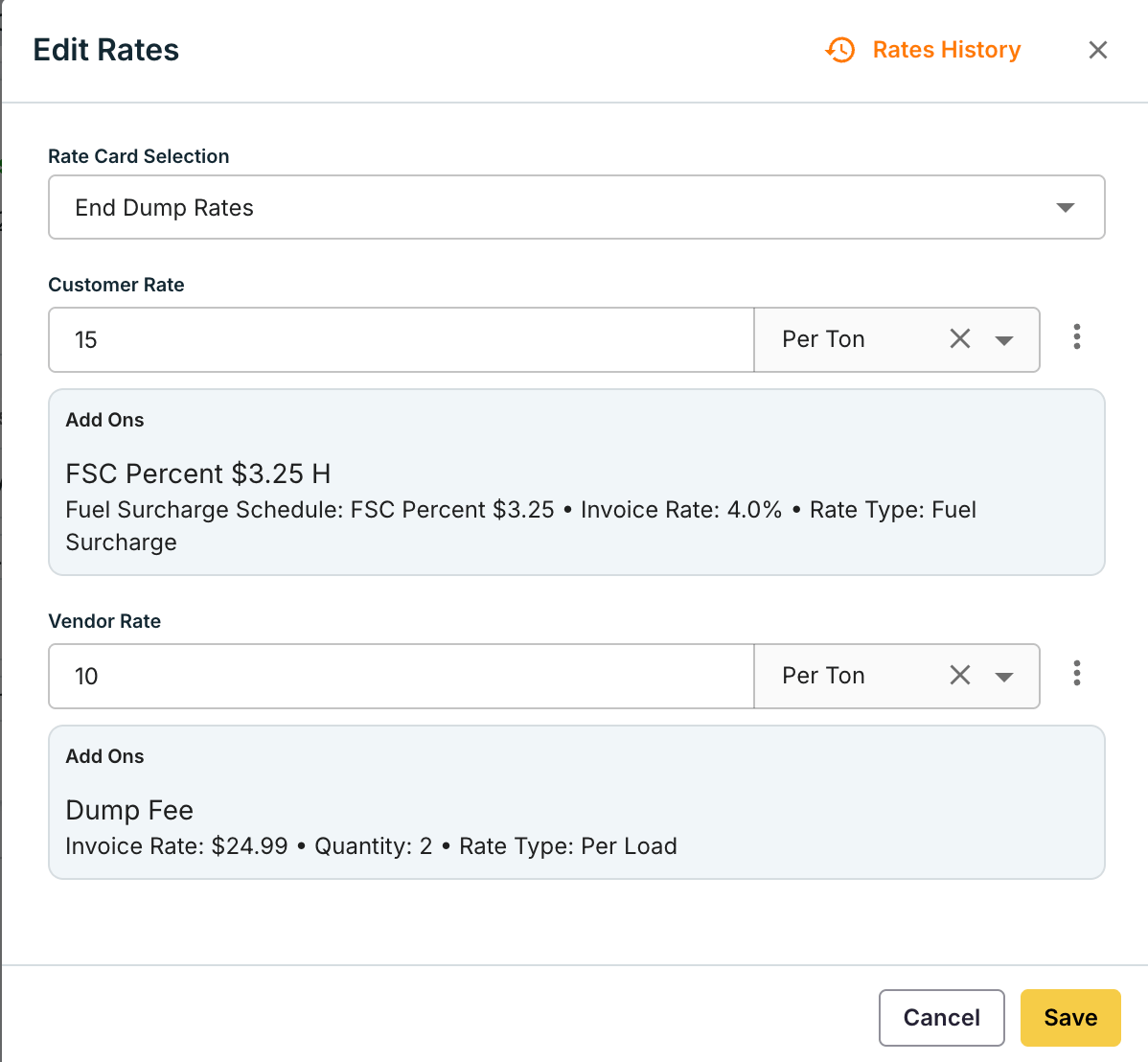
Editing and stamping
While an order is referenced to the project, rate edits can sync both ways between project and order. When an order is dereferenced, its rates are stamped — snapshotted and disconnected — so later project edits never change finished billing. A rate edit can reach beyond where you make it. What’s reachable:Steering the cascade
On every rate change to a project or a referenced order, you choose whether the change applies to existing orders within a date range. Turn on Apply rate changes to existing orders (or …to the project and existing other orders on an order) and at Submit, a dialog opens where you pick which reachable orders receive it. Stamped orders don’t show the checkbox at all — their edits stay local, and the way back to following the project is through this dialog (see below).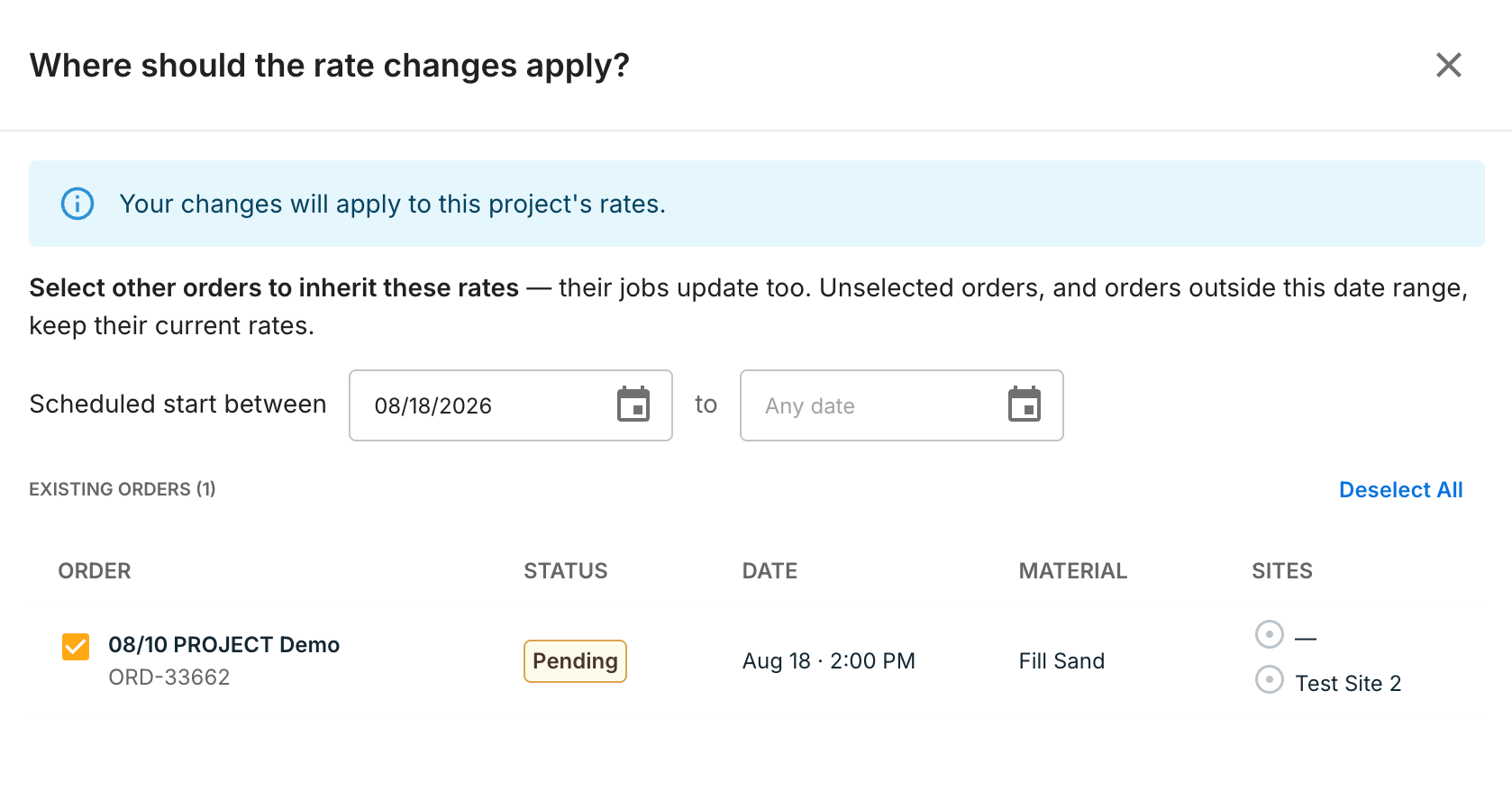
From the Order Form:
The dialog defaults to orders from today onward — set an earlier start date to reach older orders. If you pick a past range, it will re-price completed and in-progress loads, and it warns you before you do.
Deselecting stamps the order. Any order you uncheck that’s still synced is automatically stamped — it keeps its current rates and stops following the project. Future rate changes won’t reach it on their own, and its own edits never flow back to the project. Selecting a stamped order in this dialog re-references it: its own rates are discarded and it follows the project’s rates — including this change — from then on. Stamped orders default unchecked here and show a “Keeps its own rates” chip, so opting back in is always deliberate.
Rate history
Every rate change is logged. Click Rates History on a project card (or in the project form header) to see a timeline: who changed what, when, and the exact values. Use it to answer “why did this rate change?” without a support ticket.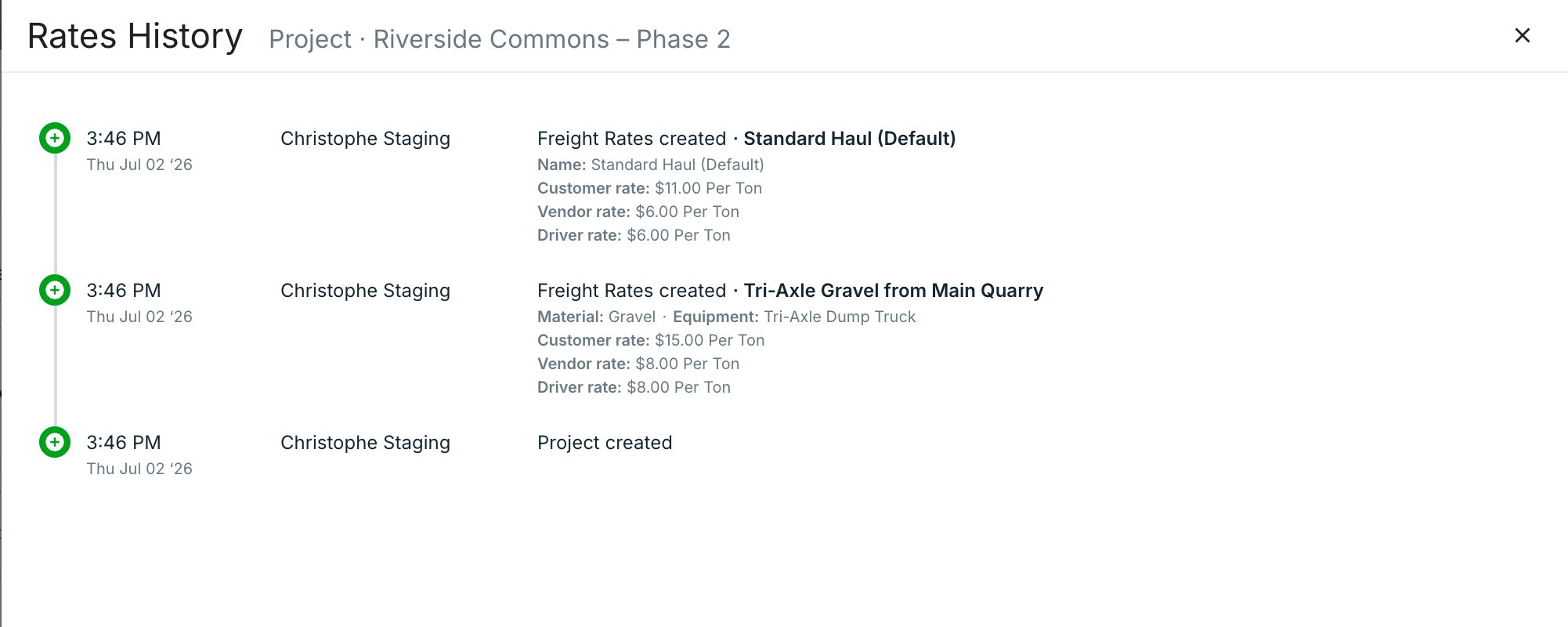
Migrating from Site Rates
Existing Site Rates were migrated automatically — no re-entry. They now appear as rates with a Pickup Site condition and match the same way as before. Layer in more conditions when ready.Watch it
Full walkthrough — project rates end to end:
Short demo — a job auto-matching the right rate by site, material, and equipment:
Common pitfalls
FAQ
What happens if no project rate matches a job?
What happens if no project rate matches a job?
Tread falls back to your company rate cards — account-specific first, then defaults. Keep one no-condition rate on the project to guarantee a match.
Can I edit rates on an order without touching the project?
Can I edit rates on an order without touching the project?
Not while the order is active — edits sync both ways. After completion, rates are stamped and stop syncing. Job and invoice edits never sync back.
Why doesn't my completed order show my latest project edits?
Why doesn't my completed order show my latest project edits?
Completed orders hold a snapshot from when the work finished. Reopening the order keeps the stamped rates.
Can drivers see or edit rates on mobile?
Can drivers see or edit rates on mobile?
Rates on mobile are editable, not view-only. Drivers’ visibility stays gated by Roles & Permissions. Bulk edits from the order screen act as manual overrides.
Related
- Manage Rates, Add-Ons & Fees — company-level rate cards, add-ons, and fuel surcharge
- Rates, Add-Ons & Fuel Surcharges — how Tread models pricing
- Orders & Projects — how Projects, Orders, and Jobs fit together
- Settlements & Driver Pay — where matched rates land